
The Final Reckoning Needs One Film and Two Earlier Scenes
You do not need a seven-film marathon. Dead Reckoning carries the plot, while two scenes from the 1996 original make the most important returns land.
Cinema · August 11, 2026 · 8 min read
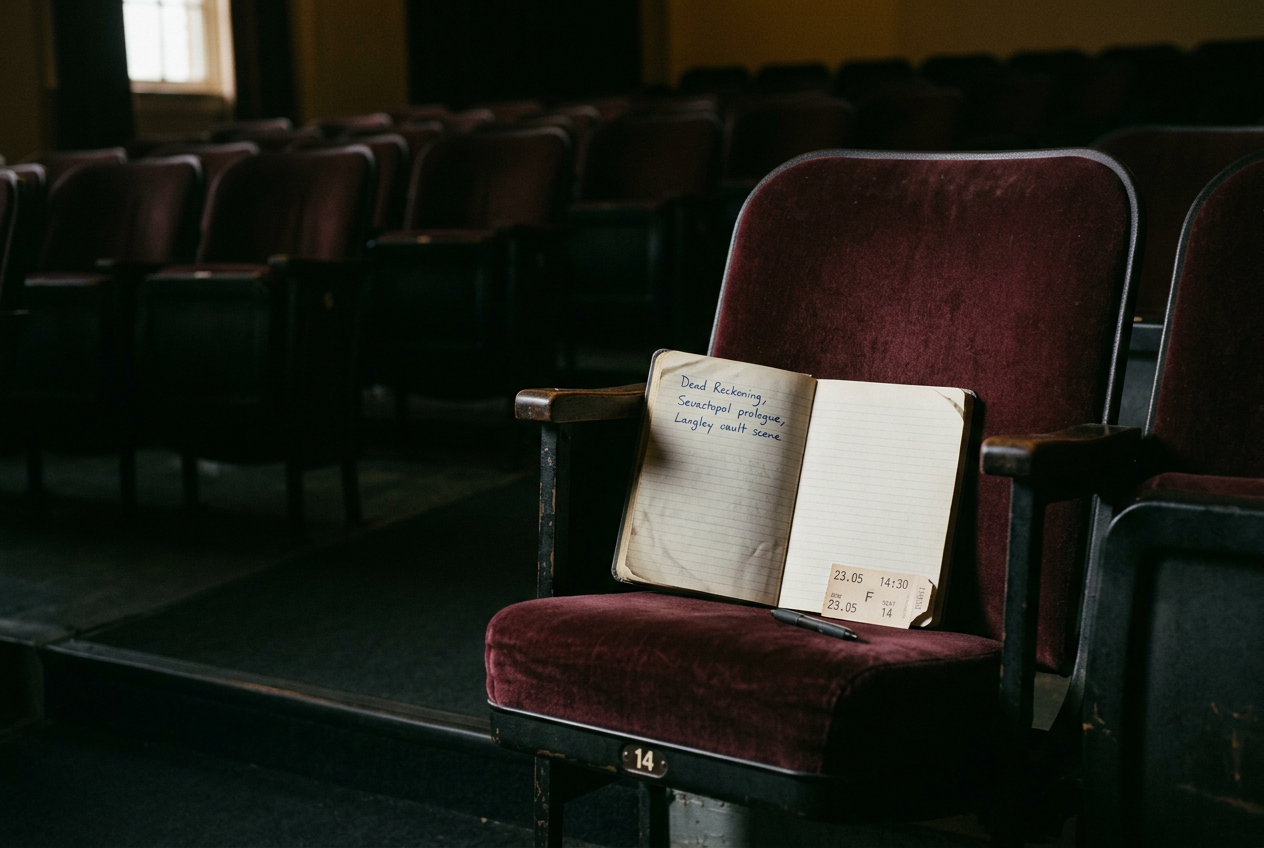
Mission: Impossible: The Final Reckoning opens with a rapid franchise montage that treats nearly three decades of missions as one tightening chain of choices, which sounds like notice to stop the movie and begin a seven-film marathon. It is not. The montage is an argument about Ethan Hunt’s history, but the plot depends on a much smaller packet of information.
This is cinema coverage, specifically a refresher for deciding how much preparation a long theatrical sequel asks of you before the premium ticket enters the calculation. The spoiler-safe answer is one complete film and two scenes. That is enough to understand the returning weapon, the immediate villain, the key relationships and the old CIA employee whose reappearance carries more weight than the opening montage can supply.
The complete film is Mission: Impossible: Dead Reckoning. The two scenes come from Brian De Palma’s 1996 Mission: Impossible: Ethan’s restaurant meeting with CIA director Eugene Kittridge, followed by the Langley vault break-in and its immediate aftermath. Together, those scenes establish how Kittridge regards Ethan, how Ethan responds when his own government defines him as a threat, and why one apparently minor analyst matters again.
The rest can wait.
The smallest useful refresher is Dead Reckoning
Final Reckoning follows Dead Reckoning directly rather than beginning a fresh mission with a returning cast. Its central object remains the cruciform key, the cross-shaped pair of interlocking pieces pursued throughout the previous film, while its main threat remains the Entity, an artificial intelligence capable of manipulating digital information and predicting behavior from enormous amounts of data.
Dead Reckoning’s opening aboard the Russian submarine Sevastopol matters most. It shows the Entity turning a vessel’s sensors and weapons against its crew, establishes that something physically stored inside the wreck may offer leverage over the system, and gives the key a function beyond being passed between agents. Final Reckoning repeatedly returns to that underwater disaster. The franchise montage cannot replace it because the montage supplies images, not the sequence’s geography or cause and effect.
The Venice material is the next essential stretch. The nightclub meeting defines Gabriel’s relationship to the Entity, positions Grace between Ethan and the intelligence agencies, and makes Ilsa Faust’s fate part of Ethan’s decisions rather than a name from an earlier installment. The train finale then completes the handoff: Grace chooses the IMF, Paris moves from Gabriel’s enforcer toward uneasy ally, and information about the Sevastopol points the next mission toward a specific physical target.
A recap video can recover those facts. It will struggle with the relationships, particularly the way Dead Reckoning shifts Grace from talented thief to someone being asked to accept Ethan’s rule that the person matters more than the mission. Final Reckoning assumes that shift has already happened, then places Grace inside an operation where impersonation, trust and timing carry more dramatic weight than her backstory.
For viewers with no time for the full predecessor, the workable substitute is to watch the Sevastopol prologue, the Venice meeting and bridge sequence, then the train’s final movement beginning with the confrontation involving Gabriel and intelligence director Denlinger. That shortcut preserves the plot spine, though it loses the airport chase that demonstrates how the Entity can corrupt a team’s communications in real time.
Why the 1996 film earns a short return
The opening montage reaches back to Ethan’s first mission, yet most of the original film’s conspiracy does not need to be retained. The NOC list, a roster of undercover agents that functions as the first film’s MacGuffin, meaning the object that drives everyone’s pursuit, does not become new homework. Jim Phelps’s betrayal does not need reconstructing either.
Kittridge does.
In the Prague restaurant scene, Kittridge tells Ethan that the failed operation has exposed him as the likely traitor. Ethan realizes the room has been engineered to contain him, creates enough chaos to escape and spends the rest of the film operating outside official approval. Final Reckoning inherits that tension. Kittridge can respect Ethan’s record while still treating control of him as a national-security problem, and Ethan can work toward the same objective as the CIA without accepting its methods.
Then comes Langley. Ethan’s team lowers him into a pressure-sensitive CIA vault while analyst William Donloe remains only a few feet away, and the sequence builds suspense by narrowing every movement: a bead of sweat, a rat in the ventilation system, a knife hitting the floor. Donloe discovers the theft afterward. Kittridge responds by ordering him sent to a radar post in Alaska.
That punishment line becomes a delayed setup for Final Reckoning. Remembering Donloe as the analyst who happened to be on duty is enough; remembering the sterile vault, and how thoroughly the CIA blamed him for Ethan’s intrusion, gives the return its charge. The opening franchise montage flashes the old material, but the vault sequence explains the relationship that the flash cannot.
The useful 1996 refresher therefore takes less than a full rewatch. Start with the restaurant accusation, continue through Ethan assembling his off-book team if time allows, and make sure to include the Langley operation and Donloe’s reassignment. The famous train finale remains excellent franchise history. It is not required here.
Plot discussion starts here
The sections below discuss returning objects, character outcomes and the structure of Final Reckoning.
The Final Reckoning turns the Sevastopol from backstory into a destination. Ethan must reach the submarine’s wreck and recover the Entity’s original source code, while the cruciform key provides access to the chamber holding it. That is why Dead Reckoning’s prologue outranks every previous franchise climax as preparation: the later underwater sequence extends its physical layout, its failed technological confidence and its image of a machine accepting false information as truth.
Gabriel remains the human antagonist because he wants control rather than destruction. His connection to Ethan’s pre-IMF past gives their conflict a personal frame, but Final Reckoning still offers the necessary explanation; no earlier released film contains a fuller Gabriel origin story waiting to be recovered. Rewatching the whole franchise cannot solve material that Dead Reckoning introduced through newly created flashbacks.
Paris also carries forward cleanly from the train. Her decision to help Ethan after Gabriel turns on her is the relevant fact, and Final Reckoning treats her as a dangerous ally rather than asking viewers to remember every beat of her pursuit through Rome and Venice. Grace requires more attention because she now occupies the operational space once held by other members of Ethan’s circle, especially when masks and identity swaps become part of the plan.
Luther Stickell carries the heaviest accumulated relationship. He has been with Ethan since the 1996 film, but viewers do not need to audit every keyboard and safe house they have shared. The essential pattern is stable across the series: Luther understands Ethan’s refusal to calculate human lives as expendable inputs, even when he knows that refusal makes the mission harder. Final Reckoning pushes that bond toward sacrifice, and the history adds weight, though the immediate scenes explain the choice.
The Rabbit’s Foot from Mission: Impossible III also returns to the franchise’s continuity as part of the explanation for how earlier technology fed the Entity’s development. A rewatch offers limited help because Mission: Impossible III intentionally left the Rabbit’s Foot undefined. Knowing that Ethan recovered a dangerous, unexplained object is sufficient. Final Reckoning supplies the retrospective connection itself.
That distinction matters throughout the film. Some returns complete unfinished mechanics, as the key and Sevastopol do. Others reward recognition without demanding it, as Donloe does. The opening montage places both categories side by side, which makes the continuity look denser than the viewing burden is.
Mission: Impossible II, Ghost Protocol, Rogue Nation and Fallout deepen the history but do not unlock the plot. Rogue Nation and Fallout make Ilsa’s absence more painful, while Fallout introduces Erika Sloane before her later rise to the presidency, yet Final Reckoning identifies Sloane’s current authority and Dead Reckoning establishes Ilsa’s immediate importance. Those films are emotional enrichment. They are not admission requirements.
What the homework means for the premium ticket
The refresher does not make Final Reckoning shorter. Its deliberate briefings, reversals and repeated statements of global stakes create a long sit even when every callback is understood, so a marathon on the same day is poor preparation. Dead Reckoning the night before, followed by the two 1996 scenes closer to showtime, preserves attention for the passages built around silence, physical strain and extended suspense.
Premium presentation is most relevant to the Sevastopol dive and the late aircraft sequence, where scale, engine noise and spatial orientation do more work than franchise recognition. A larger screen and strong sound system can justify paying above a standard ticket, but no format surcharge fixes fatigue. The better upgrade is scheduling: avoid stacking the predecessor and sequel back to back unless a long theatrical session is already the attraction.
Questions people ask
Do
I need to watch every Mission: Impossible film before The Final Reckoning?
No. Dead Reckoning contains the plot setup that Final Reckoning directly continues. Add the restaurant confrontation and Langley vault sequence from the 1996 original for Kittridge and Donloe; the other films deepen Ethan’s relationships but are not needed to follow the mission.
Can
I watch The Final Reckoning without seeing Dead Reckoning?
The film repeats enough information to remain legible, but the key, the Sevastopol, Gabriel, Grace and Paris all arrive from Dead Reckoning. Skipping it turns several early explanations into maintenance work and weakens the emotional logic behind Ethan’s treatment of Grace and Ilsa’s absence.
Is
Mission: Impossible III required because the Rabbit’s Foot returns?
No. The earlier film never fully explains what the Rabbit’s Foot is, so revisiting it cannot provide a missing technical answer. Remember only that Ethan recovered a dangerous object whose significance was deliberately withheld; Final Reckoning builds the new continuity around it.
Should
I see The Final Reckoning in a premium format?
A large screen and capable sound system suit the underwater and aircraft sequences, where geography and mechanical noise matter. Choose premium presentation if the surcharge is comfortable, but protect your attention first: watch Dead Reckoning on a previous night, then use the Sevastopol prologue and 1996 Langley sequence as the final refresher.
One update a day
Today's review, in your inbox
One review each morning — no hype, no filler, just what is worth watching.


