
The Squid Game Binge Plan That Avoids Its Worst Cliffhanger
Do not divide Squid Game into equal nightly chunks. This complete-series plan stops after finished games and carries the second-season cliffhanger straight into its answer.
Streaming · August 11, 2026 · 8 min read
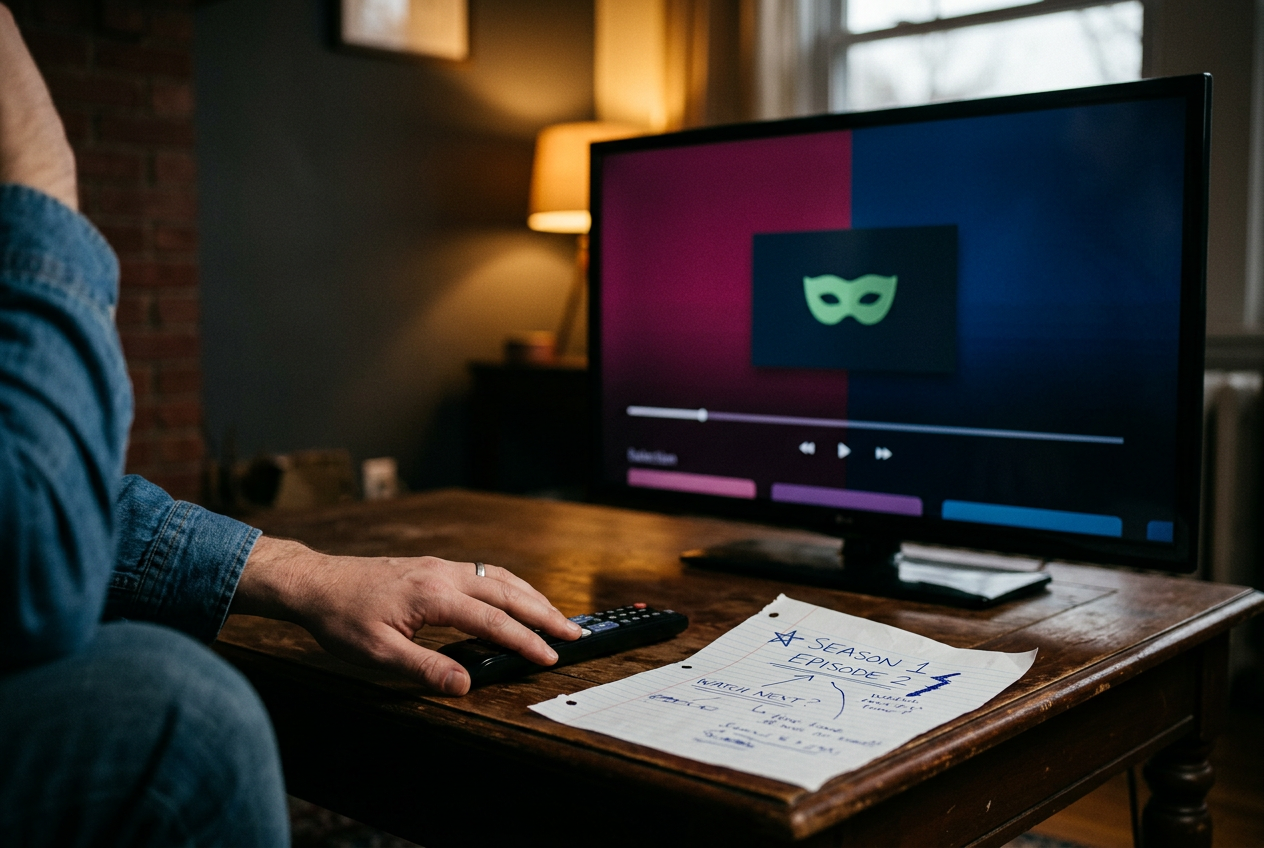
Squid Game is streaming coverage, and its practical problem at home is structural: Netflix presents three seasons and 22 episodes, but the natural stopping points do not arrive at tidy two-episode intervals. Some games begin near the end of one episode and consume the next. Other episodes finish the action, then leave an emotional consequence hanging so sharply that stopping feels less like a break than an interruption.
The model pause arrives early, in Season 1, Episode 2, “Hell.” After the opening game establishes the series’ rules, the second episode lets the contestants vote, return to their lives and consider whether the outside world offers a meaningful alternative. It is a full reset in location, pressure and dramatic purpose. More important, it gives the viewer room to decide whether to continue without using an unfinished game as leverage.
That episode is the anchor for this plan. Whenever possible, stop where “Hell” stops: after a choice has been made, after the immediate machinery has quieted and before the next game starts tightening the rope. The show does not offer many pauses that clean.
The first half of this guide is safe for new viewers. A later section, clearly labeled, explains the specific plot turns behind the most unusual boundaries.
The spoiler-safe 12-session plan
Session 1: Season 1, Episodes 1 and 2. Allow roughly two hours. The first game supplies the shock; “Hell” supplies the argument for the whole series. Stopping after Episode 1 leaves the show looking like a mechanism built only to eliminate people, while Episode 2 restores the social pressure that makes their return matter.
Session 2: Season 1, Episodes 3 through 5. This is the first long sitting, covering two major game movements and a substantial piece of the operation behind the contest. Episode 4 ends during a game rather than after it, so it is a poor bedtime boundary. Episode 5 resolves that immediate pressure and closes a parallel investigation cleanly enough to step away.
Session 3: Season 1, Episode 6. Watch it alone. “Gganbu” completes its game, but pairing it with the next episode gives its losses no room to register. This is where equal-count binge plans fail most obviously: two episodes may fit the evening, yet the series has already spent the emotional energy of a feature-length drama.
Session 4: Season 1, Episodes 7 through 9. This is another long sitting, but the alternatives are worse. Episode 7 ends after a game while leaving its human result unresolved, and Episode 8 is shorter than the surrounding chapters but closes on a direct push into the finale. Start these three only when there is time to finish the season.
Take a real break after Season 1. “Hell” temporarily opens the story outward; the finale closes its first large moral argument and changes the reason for continuing. Moving straight into Season 2 can make that transition feel like the next autoplay beat rather than a new phase.
Session 5: Season 2, Episodes 1 and 2. These episodes rebuild the contest from outside it, with pursuit and preparation taking priority over games. They belong together because the first episode’s recruitment thread feeds the second episode’s movement toward the arena. Stop before Episode 3, which begins the new competition in earnest.
Session 6: Season 2, Episode 3. The returning game is a complete dramatic unit. Watching it alone also makes room for the altered social dynamic inside the arena, where experience is useful but cannot make other people trust what they are hearing.
Session 7: Season 2, Episodes 4 and 5. Episode 4 stops midway through a team-game movement. Episode 5 pays it off, handles the vote that follows and establishes the next threat. The final minutes point forward, but the completed game gives this pair a firmer ending than Episode 4 could provide by itself.
Session 8: Season 2, Episode 6. Treat “O X” as another single-episode endurance session. Its game has repeated rounds, shifting groups and little recovery time, so adding the finale immediately can turn character decisions into visual noise. The endpoint is tense, though it remains a better pause than anything inside the episode.
Session 9: Season 2, Episode 7 and Season 3, Episode 1. Ignore the season boundary. The second-season finale ends at the most punishing cliffhanger in the complete run, while the next premiere functions as its consequence chapter. Netflix separates them by season; the story does not.
Watching both creates a heavy but intelligible block, and Season 3’s first episode reaches the closest thing available to a reset before the final games take over.
Session 10: Season 3, Episode 2. Watch this alone for the same reason “Gganbu” stands alone. A game reaches its end, but the episode’s weight comes from choices made inside it, not from the rules. Continuing immediately would reduce those choices to setup for the next obstacle.
Session 11: Season 3, Episodes 3 and 4. The third episode finishes another game movement, and the fourth reorganizes the remaining players around the final stage. Episode 4 is a transitional chapter, but here transition helps: it moves the season from immediate survival into the narrower argument of the finale.
Session 12: Season 3, Episodes 5 and 6. Keep the last two together. Episode 5 does not offer a stable exit, and the finale resumes the same contest rather than launching a separate one. Allow a little over two hours and turn off autoplay afterward.
The series ends with a coda, meaning a closing passage after the main action, that is easier to assess when Netflix is not already suggesting the next title.
What the plan reveals about each season
Season 1 has the strongest internal rhythm because it alternates games with meaningful decompression. “Hell” is the clearest example, but the pattern continues through investigation, voting and alliances that have time to change before the next rule set arrives. Even its awkward boundaries feel deliberate: Episode 4 interrupts a game to create suspense, while Episode 6 refuses to soften its completed one with immediate spectacle.
Season 2 is shaped as a bridge. Its opening takes time to return to the arena, then its later episodes compress games, votes and resistance into a run that does not resolve at the season line. That makes it harder to schedule as an independent season and less satisfying if a subscription ends there. Anyone starting now has an advantage over viewers who met that cliffhanger before the final season was available: Season 3, Episode 1 can be treated as the second half of the same movement.
Season 3 is more punishing because its resets are shorter. Consequences overlap with new rules, and the story has less interest in returning to ordinary life as a point of comparison. The proposed one-episode sessions are not signs of weak pacing. They acknowledge that completed games can exhaust attention even when the “next episode” button appears within seconds.
This is also why a one-season-per-weekend plan is a bad fit. Season 1 can support it if the final three episodes remain together. Season 2 cannot, unless the third-season premiere is added, and once that exception is made, equal seasonal boundaries have stopped doing useful work.
Spoilers: why the late pauses fall where they do
The following section discusses deaths, the failed uprising and the final games.
Season 2, Episode 6 completes Mingle, whose rotating group requirements force players to choose partners repeatedly under a countdown. The game kills Se-mi, pushes Yong-sik into killing to protect his mother and leaves Gi-hun looking for another way to stop the contest. That is enough narrative closure for one sitting, even though the plan for rebellion begins to form around it.
Episode 7 then stages the uprising and kills Jung-bae in front of Gi-hun. Ending a night there preserves neither a completed game nor an emotional reset; it freezes the story at punishment. Season 3, Episode 1 processes the revolt’s failure, returns the survivors to the dormitory and moves the competition toward Hide and Seek. The premiere is still grim, but it answers what happened to the rebellion before asking the viewer to absorb the next game.
Season 3, Episode 2 deserves its own session because Hide and Seek ends with Geum-ja killing Yong-sik to save Jun-hee. The episode makes family loyalty collide with the game’s rules in the most direct form available. Rolling straight into the aftermath gives the death the same weight as a routine elimination, which the series’ staging does not support.
Episodes 3 and 4 work as a pair because Jump Rope completes the passage from the remaining adult players to the baby’s designation as Player 222. Episode 4 then narrows the field and prepares Sky Squid Game. That reorganization is the late-series version of what “Hell” accomplished early on, though it cannot return anyone to the outside world or restore the possibility of refusing the contest.
The final two episodes should stay together because Sky Squid Game crosses their boundary. Episode 5 ends with Myung-gi attacking Gi-hun after two rounds, not with a completed choice that can settle overnight. Episode 6 resolves the game, Gi-hun’s sacrifice and the fate of the prize. A pause between them would obey Netflix’s episode count while ignoring the scene still in progress.
If time is tighter than the plan
For a two-night Season 1 watch, use Episodes 1 through 5 on the first night and 6 through 9 on the second, but build a break after “Gganbu.” The better version remains four sessions because “Hell” and Episode 6 both need air.
Season 2 should take at least four sessions: Episodes 1 and 2, then 3 through 5, then 6, followed by Episode 7 with Season 3, Episode 1. Do not isolate the finale unless stopping at a hard cliffhanger is part of the appeal.
The last five episodes can fit into two nights as Episodes 2 through 4 and Episodes 5 through 6. That arrangement is harsher than the full plan, yet it still protects the final game from an arbitrary split and preserves the series’ most consequential late choice as the end of a session.
Questions people ask
Should I watch Squid Game one season at a time?
Season 1 works as a self-contained weekend if Episodes 7 through 9 remain together. Season 2 does not: its finale stops during the failed uprising’s consequences, so pair it with Season 3, Episode 1 rather than treating the Netflix season boundary as a natural ending.
Where is the best first-night stopping point?
Stop after Season 1, Episode 2, “Hell.” The opening game establishes the threat, while the second episode returns the players to ordinary life and completes their decision about whether to participate. It is the cleanest emotional reset in the series.
Which
Squid Game episodes should be watched alone?
Season 1, Episode 6; Season 2, Episodes 3 and 6; and Season 3, Episode 2 all benefit from individual sessions. Each completes a major game or choice whose emotional effect gets flattened when another episode begins immediately.
Can I stop after the Season 2 finale?
You can, but it is the least satisfying planned pause in the run. The finale ends with the uprising crushed and Gi-hun facing a devastating loss; Season 3, Episode 1 supplies the consequence chapter, so watch them in the same session if the complete series is available.
One update a day
Today's review, in your inbox
One review each morning — no hype, no filler, just what is worth watching.


