
Avatar: Fire and Ash Premium Tickets Need a Format Check
3D, high frame rate and a larger screen solve different problems. Check the projector, show label and remaining seats before paying for the most expensive Avatar ticket.
Cinema · August 11, 2026 · 8 min read
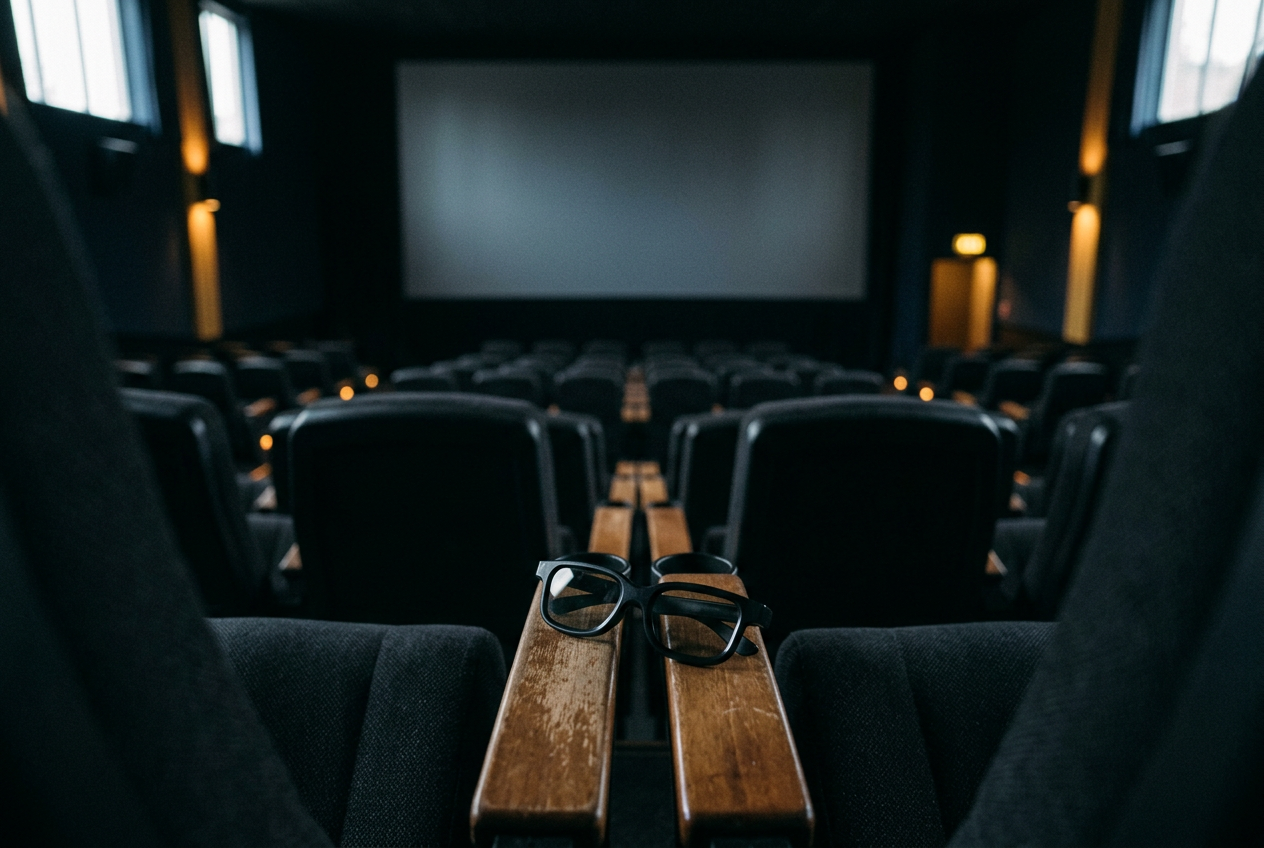
This is cinema coverage, and it contains no plot discussion. The useful question is narrower than whether Avatar: Fire and Ash belongs on a large screen: when one booking page offers 3D, HFR, IMAX and standard shows at different prices, which combination protects the image qualities the film asks you to notice?
Keep one booking decision in view. A 3D HFR show has only off-center seats left, while a less expensive 3D show has a centered seat around two-thirds of the way back. The premium badge makes the first option look automatic. It is not.
Motion clarity, image brightness and subtitle readability depend on different parts of the presentation chain, and a weak seat can erase part of what the surcharge bought.
The safest order is theater first, seat second, format label third. Price comes last.
Start with the show label, then verify it
High frame rate, or HFR, means footage shown with more images per second than the long-established theatrical rate of 24 frames per second. More temporal information can make fast movement easier to follow, particularly when the camera crosses a detailed environment or an object moves quickly through depth, because the image travels a shorter apparent distance between frames.
That does not tell you how an individual screening uses HFR. A listing may identify the feature without explaining whether the whole presentation runs at one elevated rate or whether the rate changes according to the material. It may also leave the projector type unstated. The theater page is a starting point, not proof.
Before paying, look for an explicit label such as “3D HFR” attached to the individual showtime rather than a general format description elsewhere on the site. If the chain provides an auditorium specification, check that too. When the listing says only IMAX 3D or premium 3D, do not assume HFR is included. Call the theater if the distinction affects the purchase, and ask whether that exact showtime is scheduled in HFR.
Use equally plain language when asking about projection. Laser projection uses a laser light source rather than a traditional lamp, and in a 3D presentation its brightness headroom can matter more than a decorative auditorium name. The employee may not know every technical detail, but the theater should be able to confirm whether the show is 3D, whether it is HFR and whether the listed auditorium uses laser projection.
Return to that booking screen. The off-center 3D HFR show has a real motion advantage only if the label is accurate and the projection is properly configured. HFR cannot brighten an underpowered image, move your seat toward the middle or enlarge subtitles that become difficult to read through tinted glasses.
Treat 3D brightness as the first constraint
A 3D system sends a different image to each eye, while the glasses help separate those images. The glasses and projection system reduce the light that reaches the viewer, which is why a 3D show can look dimmer than its 2D counterpart even when both carry the same premium branding.
Brightness affects more than spectacle. Dark textures separate less clearly when the image is underlit, fine background detail becomes harder to parse, and subtitles can lose some of the sharp contrast that makes them readable at a glance. A large screen does not repair that. It can spread the available light across more surface area, depending on the projector and auditorium setup.
This is where laser projection earns practical weight. It does not guarantee a good presentation, since alignment, calibration and maintenance still matter, but it is a useful verification point when choosing among nearby 3D screens. If one theater identifies its premium 3D auditorium as laser-equipped and another supplies no projection information, the first gives you a more concrete reason to pay extra than screen size alone.
Arrive early enough to inspect the image before the feature. Keep the glasses clean, and use the brightest neutral material on screen, such as white text or a rating card, as a basic check. One eye should not appear markedly darker than the other. Text should look stable rather than doubled.
If the image is persistently soft, misaligned or too dim to read, tell staff before the movie is well underway, when a seat change or refund is still possible.
Viewers who wear prescription glasses should also test comfort immediately. A 3D frame that presses against another pair can become distracting over a long feature, while smudges across either lens soften text and fine edges. That is a mundane problem. It can matter more than HFR.
HFR changes motion, not every image problem
The most persuasive case for HFR comes during lateral camera movement, rapid action and movement toward or away from the lens. At 24 frames per second, those passages can show judder, meaning visible stepping or stuttering as an object changes position between frames. Additional frames can smooth that displacement and keep spatial information legible.
The tradeoff is perceptual rather than purely technical. Some viewers associate smoother motion with live television, sports or video because those formats trained the eye differently from 24-frame cinema, and heightened clarity can make sets, costumes or performance timing feel more exposed. Others adapt after a few minutes and value the cleaner movement. Neither response can be settled by the ticket price.
Do not buy HFR to solve subtitle trouble. Subtitles remain fixed long enough to read, so their clarity depends more directly on focus, brightness, contrast, 3D alignment and viewing angle. HFR can make the moving picture behind the words easier to follow, reducing the visual scramble around them, but it does not make the lettering larger or restore light lost through the glasses.
The format can still help viewers who find 3D action tiring when motion becomes smeared or jerky. It may be less useful to someone who notices the video-like smoothness immediately and cannot stop noticing it. If uncertainty is high, a cheaper HFR presentation is a better experiment than the theater’s costliest package. Format preference is learned by seeing the format, not by trusting its rank on a booking page.
Choose the seat for geometry, not status
For Avatar: Fire and Ash in 3D, prioritize horizontal centering. Sitting far to one side makes the screen a trapezoid from your viewpoint, increases the distance between the nearest and farthest parts of the image, and can make subtitles along the lower frame more tiring to scan. The premium recliner at the edge is still an edge seat.
Distance comes next. A position around the middle to two-thirds of the way back is a sensible starting range in many stadium-style rooms, although auditorium shape varies enough that no row letter works everywhere. From there, the screen should fill the field of view without forcing repeated head movement between subtitles and the upper image.
Avoid the front few rows for 3D unless proximity is already your preference. A very close seat exaggerates the distance your eyes travel across the frame, and strong depth effects can demand more frequent refocusing between foreground and background. Conversely, the last row may reduce immersion and make smaller subtitle lettering harder to resolve, particularly on a wide screen.
Now the original choice is easier. The centered seat at the regular 3D show may beat the off-center HFR seat because it protects screen geometry, text scanning and visual comfort for the entire feature, while surrendering only the extra motion samples. If both shows have centered seats, HFR becomes a cleaner decision. If the HFR auditorium also uses a brighter laser system, the surcharge has two concrete jobs.
Do not use IMAX or 70mm as shorthand
IMAX identifies a presentation system and auditorium brand, but the equipment and screen geometry can differ by location. Verify whether the particular show is 2D or 3D, whether HFR appears in the listing, what projector the auditorium uses and which seats remain. The name alone cannot answer those questions.
The same restraint applies to 70mm, a film format using a wider strip of photochemical film than standard 35mm. Do not assume a 70mm show exists, or that a premium ticket described online with vague large-format language involves film projection. Unless the theater explicitly lists Avatar: Fire and Ash in 70mm, there is nothing to compare. A confirmed, well-lit digital 3D presentation is more useful than an imagined format advantage.
Audio matters, but it should break a tie rather than distract from a compromised view. A centered seat generally supports more balanced sound as well as cleaner image geometry. If the only premium seat is against a side wall, a central position in the next auditorium may again be the better purchase.
The booking checklist
First, open the individual showtime and record the exact labels. “3D,” “HFR” and “IMAX” are separate pieces of information; one does not silently guarantee the others.
Next, verify the auditorium. Favor a confirmed laser 3D screen when brightness and subtitle clarity are priorities, and contact the theater when the listing leaves HFR unclear.
Then inspect the seat map before comparing prices. Choose horizontal center, avoid the closest rows unless you know you like them, and keep enough distance to read the lower frame without moving your head repeatedly.
At the theater, clean the glasses and check white text for sharpness, equal brightness and doubling. Report a persistent fault early.
Only then weigh the surcharge. Pay more when the premium show gives you a verified presentation advantage and a suitable seat. Skip the upgrade when the badge is clear but the equipment is not, or when the remaining seat pushes you far enough off-axis to compromise the image for the whole movie.
Questions people ask
Is Avatar: Fire and Ash worth seeing in 3D?
3D is the format to consider when depth presentation is the priority, but it needs enough brightness and a centered seat. A confirmed laser auditorium gives you a stronger reason to pay than a generic premium label, while an underlit or badly angled 3D screening can lose texture and make subtitles harder to read.
Is HFR better for Avatar: Fire and Ash?
HFR can make rapid movement and camera travel clearer by showing more images each second, reducing the visible stepping associated with 24-frame motion. It does not improve brightness or enlarge subtitles, and viewers who dislike video-like smoothness may prefer a standard-frame-rate show in a better seat.
Where should I sit for Avatar: Fire and Ash in 3D?
Start near the horizontal center and around the middle to two-thirds of the way back, then adjust for the auditorium’s shape. Avoid choosing an edge seat only to keep a premium format, since the angled view can make depth, screen geometry and lower-frame subtitles more tiring.
Should I choose IMAX 3D over regular 3D?
Choose it when the exact showtime confirms the features you value, the auditorium uses a suitable projector and a centered seat remains. If the regular 3D screen offers verified laser projection and a better seat while the IMAX listing remains vague, the cheaper ticket may protect more of the image.
One update a day
Today's review, in your inbox
One review each morning — no hype, no filler, just what is worth watching.


