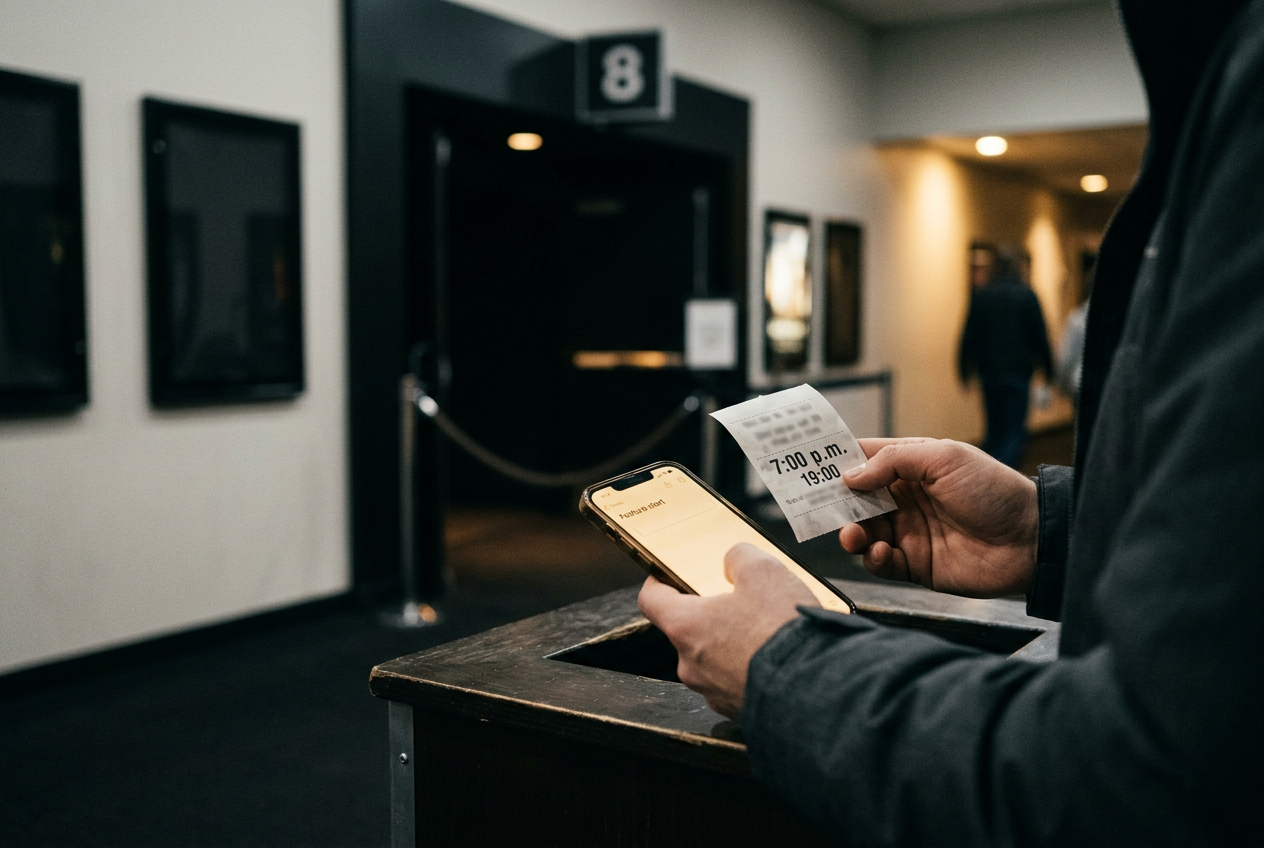
There Is No Safe 20-Minute Rule for New Jersey Showtimes
Trailer gaps vary by theater, presentation and booking. A small timing log can show how late to arrive without treating one screening as a standing promise.
Cinema · August 11, 2026 · 8 min read
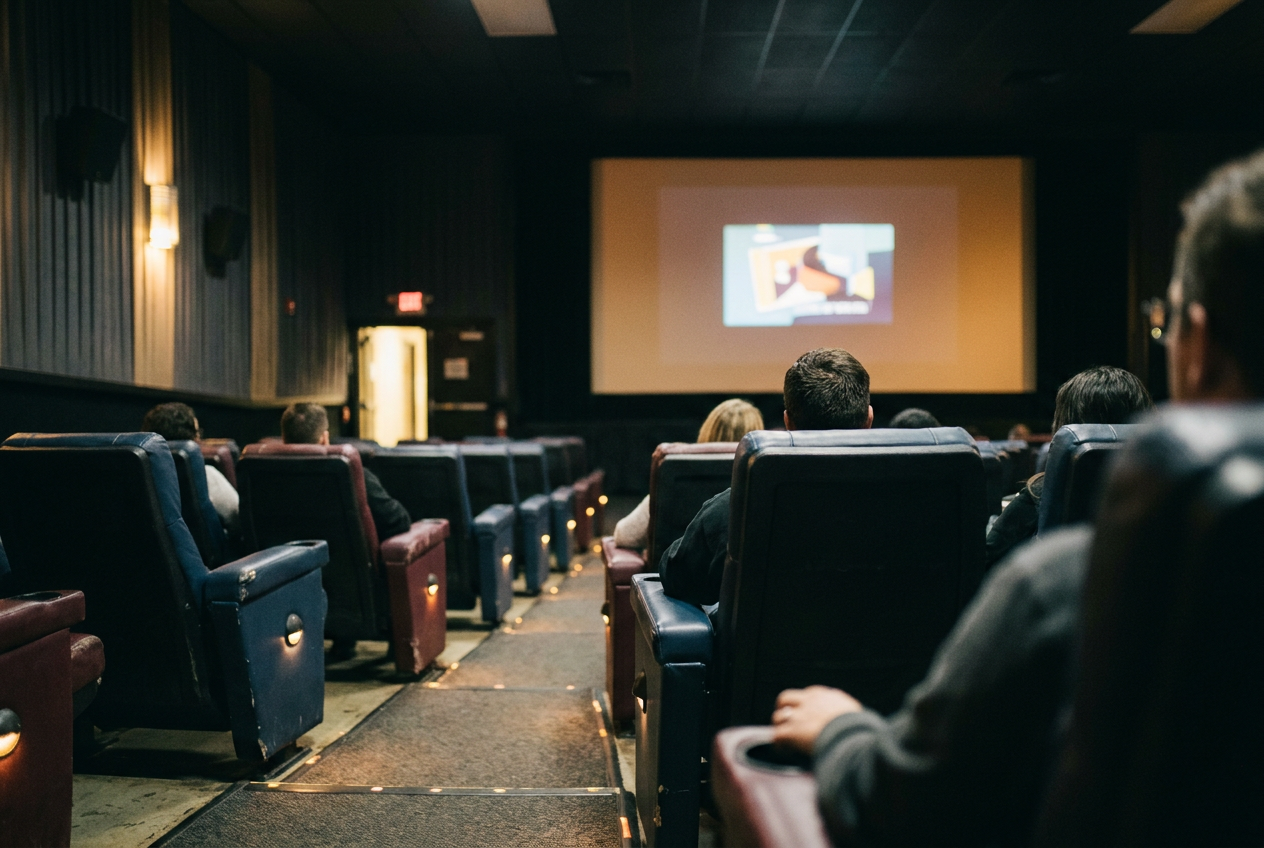
Take an illustrative 7:00 p.m. ticket. The useful time is not when the first advertisement appears or when the lights begin to dim, but the moment the feature starts, which for this audit means the first studio logo or image belonging to the movie itself.
If that moment has not been measured at this theater, for this kind of presentation, the ticket supplies no reliable permission to walk in late.
That is the central problem with the familiar multiplex calculation. A moviegoer sees a listed time, assumes a long trailer block, and mentally converts 7:00 into a later personal deadline. The conversion may work repeatedly at one location, until a different booking, premium auditorium or special engagement shortens the gap and the opening scene plays while the ticket holder is still collecting a drink.
This is cinema coverage, specifically the machinery around theatrical showtimes rather than a judgment of any one film. The practical answer is an audit small enough to maintain in a phone note, covering the New Jersey theaters and formats a reader uses rather than pretending every auditorium follows a statewide rule.
The measurement has to start at the ticket time
A listed showtime is the time printed on the ticket or displayed in the booking app. It is not necessarily the feature start, and everything shown between those two points belongs in the measured gap: house advertising, theater policy clips, trailers, premium-format bumpers and any final transition into the movie.
For a clean entry, record five things: chain and location, listed showtime, presentation, feature start and anything unusual about the booking. Presentation means the advertised exhibition type, such as a standard digital auditorium, IMAX, Dolby Cinema, Regal Premium Experience or Cinemark XD. That distinction matters because a premium booking can carry its own branded material, while an event presentation may follow a different program from an ordinary commercial release.
The feature-start timestamp should use one repeatable boundary. Count the first distributor or production logo attached to the film, not the last trailer, the ratings card before a trailer or the theater’s request to silence phones. Choosing a later boundary, such as the first dialogue or narrative image, makes films with long logo sequences look as if they started later than they did.
The 7:00 ticket remains the anchor. Note 7:00 as the scheduled time even if the auditorium is still bright, then log the feature when its first attached logo appears. Do not subtract the policy reel because it felt separate from the trailers. The reader’s risk is missing the movie, so the complete ticket-to-feature gap is the number that matters.
A useful New Jersey sample is local, not enormous
A statewide average would be less useful than it sounds. Someone who regularly chooses between a nearby AMC and Regal needs those locations represented; a Cinemark customer needs Cinemark observations, and a reader who pays for premium screens needs those presentations separated from standard auditoriums. Combining them produces a tidy figure that may describe none of the next trips accurately.
A workable starter sample includes standard evening screenings at New Jersey locations operated by AMC, Regal and Cinemark, but only when those chains are part of the reader’s real rotation. Add premium presentations as separate categories. Do not mix an IMAX entry into the standard-screen column or treat one chain’s branded large-format auditorium as interchangeable with another’s.
Each category needs repeated observations across different films and weeks. One screening establishes what happened once. It does not establish house policy, because the trailer package can change with the film, the distributor and the stage of a release, while theater advertising and operational delays may also shift the start. The audit becomes useful when it exposes a range rather than producing a single memorable number.
This article does not publish chain-by-chain timing results because no observation log was supplied, and inventing one would turn a variable schedule into false precision. The defensible takeaway is therefore a field method, not a claim that AMC, Regal or Cinemark always holds a feature for a stated number of minutes. Until a location has been measured, its safe arrival time remains the listed showtime.
A simple note can look like this:
| Theater category | Listed time | Feature start | Gap | Booking note | |---|---:|---:|---:|---| | AMC, standard | Record | Record | Calculate | Regular commercial screening | | Regal, standard | Record | Record | Calculate | Regular commercial screening | | Cinemark, standard | Record | Record | Calculate | Regular commercial screening | | Premium format | Record separately | Record | Calculate | Name the advertised format | | Event or repertory show | Record separately | Record | Calculate | Do not merge with regular releases |
The blank table is more honest than a borrowed national rule. It also creates information tailored to an actual decision: whether the 7:00 customer can finish dinner, skip concessions or choose a later screening without gambling on the opening.
Use the earliest start, not the average
Once several comparable entries exist, the average gap is tempting. It is also the wrong planning tool for anyone whose main goal is not missing the feature. A long trailer block can pull the average upward, even though the shortest observed gap is the screening that reveals how early the movie may begin.
Start with the earliest feature start in the matching category. Then subtract the personal door-to-seat time, meaning the minutes needed to park, pass the ticket checkpoint, use the restroom, buy anything and reach the auditorium. Someone who walks straight from the lobby to an assigned seat needs less margin than someone ordering hot food on a crowded evening.
Here is an illustration, not a reported theater result. If repeated logs for one standard auditorium show that the earliest feature began 18 minutes after the listed time, and the trip from arrival at the building to the seat takes six minutes, entering the building 12 minutes after the listed time uses every bit of the observed margin. A cautious plan would arrive earlier because the next trailer package could be shorter.
For the illustrative 7:00 ticket, that calculation separates two choices that often get blurred. Reaching the property after 7:00 may fit a known local pattern; joining the concession line at the last possible minute adds another variable that the trailer log cannot control. The audit estimates the program. It cannot make the popcorn counter move faster.
Keep a buffer rather than treating the earliest observed gap as a guarantee. The buffer is not a universal number, since the consequences differ: missing a disposable opening logo is one thing, while entering during a dialogue-heavy first scene and searching for a recliner in the dark affects both the late arrival and nearby viewers. The more important the film or the more expensive the presentation, the less value there is in squeezing the margin.
Separate ordinary releases from exceptions
Special events, advance screenings, repertory bookings and presentations with scheduled introductions should live in their own category. A standard commercial trailer pattern cannot safely predict them. The same caution applies when a theater app or confirmation email gives explicit instructions about prompt seating; the booking-specific notice outranks an old timing log.
Premium formats deserve their own history even within the same building. A standard auditorium and a branded large-format screen may show different bumpers or trailer packages, and changing auditoriums can erase the usefulness of an otherwise solid record. Format labels also change what the ticket costs, making a missed opening more irritating than the same mistake on a discounted standard seat.
Operational delays create another problem. If one feature starts unusually late because the previous show ran over or the projector needed attention, logging that gap without a note can distort future planning. Keep the observation, but mark it as an outlier, meaning a result far outside the normal cluster, and do not use it to justify a later arrival.
The method fails when the sample gets too broad. “New Jersey multiplex” is not a category that predicts a specific evening. “My nearby AMC, standard auditorium, regular release” is closer to one, provided the log contains enough screenings to reveal its shortest observed gap and the reader continues updating it.
What to do tonight
Without a local log, be inside by the listed showtime. That answer may feel conservative to anyone accustomed to sitting through marketing, but no evidence supplied here supports a chain-specific grace period, and a general internet rule cannot account for the exact booking on the ticket.
With a log, match tonight’s theater and presentation to the narrowest relevant category. Find the earliest recorded feature start, subtract the time required to reach the seat, and add a buffer for variation. If the calculation leaves no comfortable margin, skip concessions or choose the later show rather than betting the opening scene on an average.
The 7:00 ticket then stops being a vague suggestion and becomes the fixed point for a personal estimate. The estimate still is not a promise. It is a record of what this theater has done before, arranged so that the shortest trailer window carries more weight than the longest one.
Questions people ask
How late can
I arrive after a listed New Jersey movie showtime?
There is no dependable statewide allowance. Until you have repeated observations for the same theater and presentation, arrive by the listed time; after that, plan from the shortest recorded ticket-to-feature gap and subtract the time needed to get from the entrance to your seat.
Do
AMC, Regal and Cinemark use the same trailer length?
Do not assume they do, or that every location within one chain behaves identically. Track each theater separately, then divide standard screens, premium formats and event bookings into their own categories so that an unusually long program does not create a misleading late-arrival rule.
Does the first studio logo count as the start of the movie?
For this audit, yes. Counting the first logo or image attached to the feature creates a consistent boundary and prevents films with long opening logo sequences from appearing to start later. The last trailer is a weaker marker because theater bumpers may still play afterward.
Should
I use the average trailer gap to choose my arrival time?
Use the earliest observed feature start instead. An average can be pushed later by one unusually long trailer package or operational delay, while the shortest gap better represents the moment that could cause you to miss the opening at a future screening.
One update a day
Today's review, in your inbox
One review each morning — no hype, no filler, just what is worth watching.