Dune: Part Two Is Built for IMAX. Some Viewers Should Wait.
The sandworm ride makes the case for a premium auditorium. Sound sensitivity, caption access and weak local projection can make home the better first stop.
August 11, 2026 · 8 min read
This piece discusses the construction of early and mid-film sequences but avoids late plot turns. It belongs to both cinema and at-home coverage because the useful choice is not just where to watch Dune: Part Two, but which format should come first.
The decision hangs on one scene. Paul Atreides must cross open desert, summon a sandworm and climb onto its moving back while sand pours over him. Denis Villeneuve builds the sequence in stages: preparation, a long wait beneath an exposed sky, the first signs of movement underground and then the violent problem of getting aboard. The image gives the body scale.
The soundtrack makes the ground feel unstable.
That combination is a strong argument for an auditorium. It is not an automatic argument for every auditorium, or for every viewer.
What the sandworm ride asks from a theater
IMAX, a large-screen format with proprietary projection and sound, can make the sandworm scene legible before it becomes overwhelming. The wide desert compositions establish how little protection Paul has, while selected presentations use a taller aspect ratio, meaning the shape of the projected image, to show more vertical space. When the worm arrives, the frame can hold Paul, the collapsing slope and the creature’s scale without reducing the sequence to fast fragments.
The sound has a related job. Low frequencies announce movement beneath the sand, then the mix increases pressure as Paul loses his footing and fights toward the worm’s back. In a well-run room, the quieter setup leaves somewhere for the sequence to go. A screen with weak projection or a system played without enough control can flatten that structure into a murky image followed by punishing volume.
This is why screen size alone should not settle the ticket purchase. A maintained IMAX screen with laser projection is a stronger bet than an auditorium carrying premium branding but offering dim light and poorly balanced sound. Dolby Cinema, a premium format pairing laser projection with Atmos surround sound, can be the better local option when its screen is brighter, its seats suit a long film and the venue has a record of consistent presentation.
The film also received limited 70mm presentations, using wide film stock rather than ordinary digital projection, alongside rarer IMAX 70mm engagements. Those labels describe different experiences. Standard 70mm offers a film-projected image and does not reproduce the tallest IMAX framing; IMAX 70mm combines the larger film format with the format’s expanded frame. Dune: Part Two was photographed with digital cameras, so these prints are film-outs rather than images originating on a camera negative.
The appeal lies in the projection texture and event presentation, not in recovering a supposedly pure version hidden from digital audiences.
Pay extra only when the venue tells you which format it is showing. If the listing says merely “70mm,” do not assume IMAX 70mm. If a distant premium screening adds a long drive, awkward seat or poor sightline, the sandworm may grow larger while the viewing conditions get worse.
Sound sensitivity can reverse the obvious choice
Dune: Part Two relies on a broad dynamic range, the distance between its quietest and loudest sounds. Dialogue may sit under wind, breath or music before the mix opens into aircraft, machinery and combat. The sandworm ride is designed around that escalation. For a viewer sensitive to sustained bass or sudden peaks, the same design can divert attention from Paul’s movements and the scene’s geography.
A home setup gives that viewer control. Volume can come down before the worm arrives. Dynamic-range compression, a setting that narrows the gap between quiet and loud sound, can keep dialogue audible without letting the largest effects jump as far. Headphones may improve speech clarity, though strong bass and close sound can still be tiring.
A television’s night mode is less faithful to the theatrical mix, but fidelity is not useful when discomfort prevents someone from following the film.
Earplugs are another option in a theater, especially reusable filtered plugs made to lower volume more evenly than foam. They still alter the balance, and they do not guarantee comfort during sustained low-frequency passages. A viewer who already knows that heavy bass triggers pain or fatigue should not treat the premium ticket as an endurance test.
The home compromise is physical scale. The sandworm’s arrival becomes an image inside a room rather than an image that reorganizes the room, and television speakers may turn the layered rumble into a generic low roar. Good headphones can recover detail but cannot recreate the relationship between a very large frame and sound moving through an auditorium.
Subtitle needs are about access, not preference alone
Dune: Part Two includes designed subtitles for fictional languages, which every audience sees, but those do not replace accessibility captions for English dialogue and sound information. The distinction matters during whispered exchanges, scenes with unfamiliar names and moments when speech competes with the score.
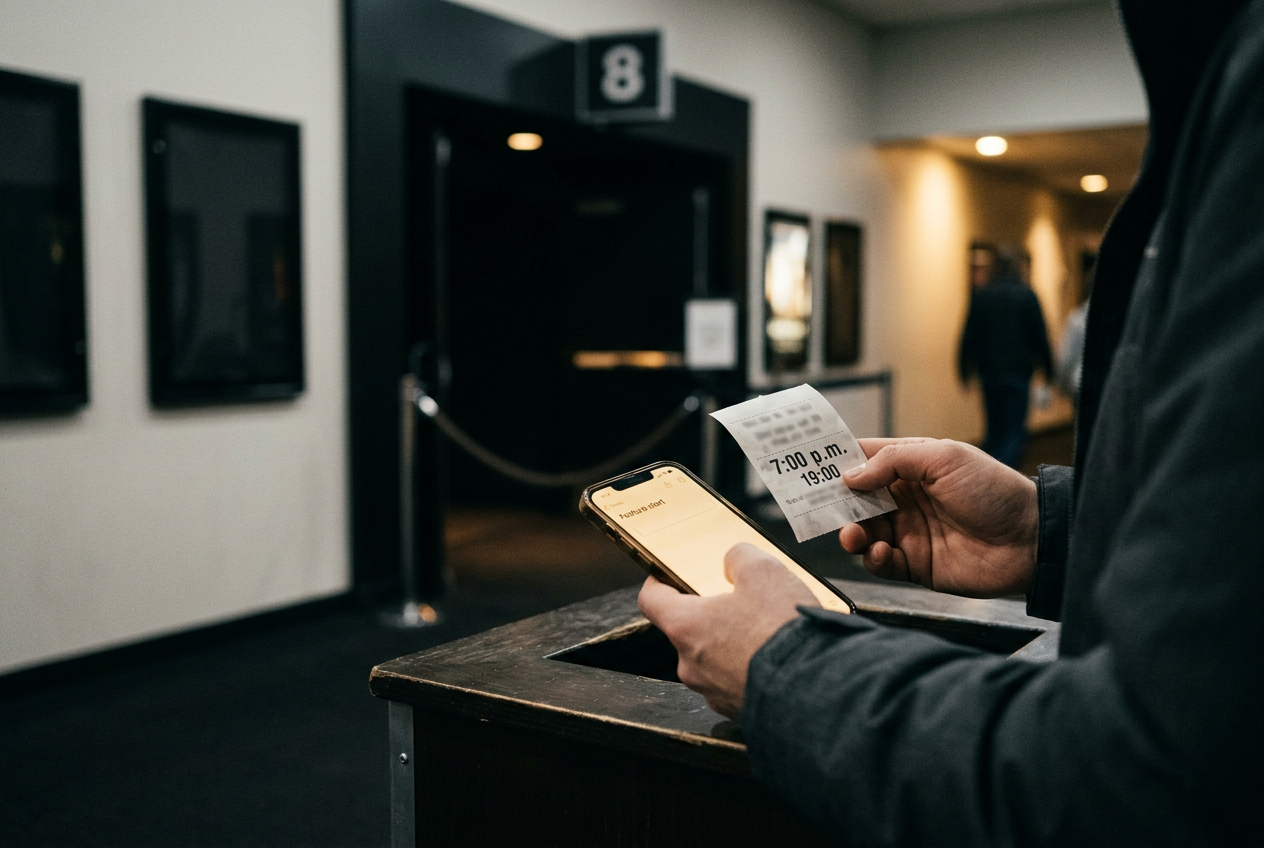
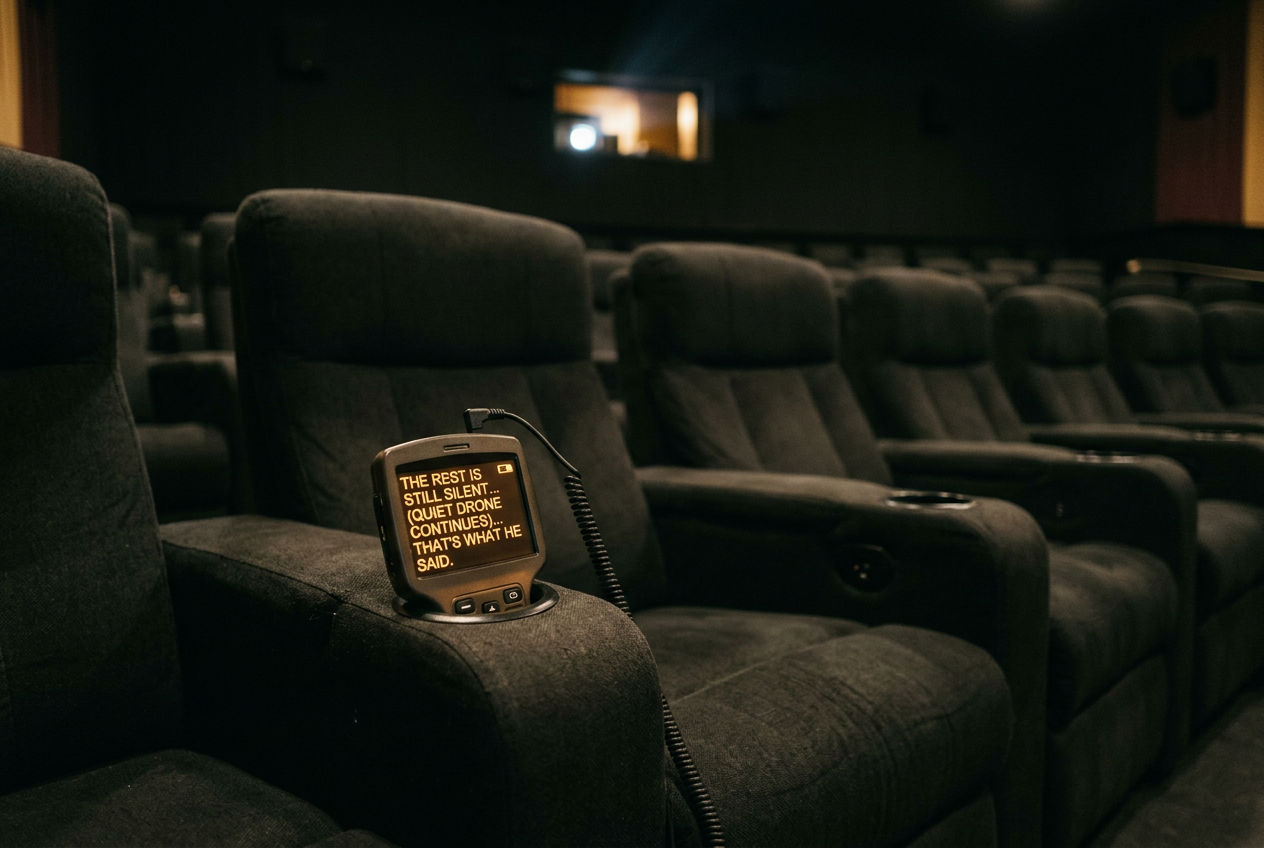
Theater access varies by venue and showtime. Open captions appear on the main screen for everyone, while closed-caption devices provide text to an individual viewer. Open-caption screenings usually offer the cleanest line of sight, but schedules may be limited. Personal devices can require adjustment and may become tiring during a long feature.
Anyone relying on captions should check the actual session rather than assuming that a premium-format listing includes the needed option.
At home, captions stay in the same visual plane as the movie and can usually be resized or restyled by the playback device or service. Pausing also helps with political vocabulary and character relationships. That control costs momentum. The sandworm sequence is built around uninterrupted accumulation, and stopping when Paul first reaches the moving sand releases the pressure Villeneuve has spent several minutes creating.
A practical split follows. If captions are helpful but not essential, an open-caption premium screening preserves most of the auditorium case. If captions are necessary and the local theater offers only an unreliable device, home is the better first viewing because comprehension matters more than expanded framing.
The distribution plan does not require a guessed streaming date
Warner Bros. launched Dune: Part Two as an exclusive theatrical release in March 2024, with IMAX and 70mm among the publicly promoted formats. Home availability was expected to follow the cinema run, but a theatrical opening did not by itself establish a subscription-streaming date. Transactional home viewing, meaning digital rental or purchase, and inclusion with a streaming subscription are separate stages.
That distinction changes what “wait for streaming” costs. Waiting for a rental preserves control over captions, volume and pauses without requiring another monthly service. Waiting until the film joins a subscription may cost less for someone already paying for that platform, but the date should come from an official announcement rather than a calculation based on another Warner release.
The theatrical window, the period when a film plays in cinemas before home release, is therefore a choice between known conditions and an unknown interval. The known conditions are the local screen, the available caption session, the ticket price and the viewer’s tolerance for the mix. The interval should not be filled with a prediction.
Repeat viewing changes the order
Dune: Part Two carries enough political detail that a second viewing has a different task from the first. The first can map scale and movement: the sandworm crossing, the aircraft against the desert and bodies arranged inside monumental architecture. The second can stay closer to names, strategic conversations and shifts in allegiance, helped by captions and the ability to replay a line.
For viewers likely to watch twice, theater first and home second is the strongest order. The auditorium supplies the physical information that is hardest to reproduce later; home playback then makes dense dialogue easier to parse. The sandworm ride survives that move because its construction remains visible even after its largest sensory advantage shrinks.
A viewer planning only one watch should be stricter. Choose premium cinema if a good screen is nearby, the sound level is manageable and caption access is adequate. Choose home if understanding dialogue requires reliable captions, if bass sensitivity will dominate the evening or if the only premium ticket comes with a bad seat and a substantial surcharge.
Standard theatrical projection occupies the least convincing middle. It still offers a dark room and fewer domestic distractions, but it may lose the expanded image and controlled sound that justify leaving home. If premium sessions are sold out, waiting is not a failure to appreciate the film. It may be the more attentive choice.
Questions people ask
Is Dune: Part Two worth an IMAX ticket?
Yes, when the theater offers strong projection, a comfortable sightline and sound you can tolerate. The sandworm ride uses the taller image and auditorium bass to clarify scale, but a weak or painfully loud room removes much of the premium’s value.
Is 70mm better than regular IMAX for Dune: Part Two?
Not by label alone. Standard 70mm provides film projection but not the tallest IMAX framing, while IMAX 70mm is a rarer presentation; a well-maintained laser IMAX can produce a brighter, more consistent image than a poorly handled film print.
Should viewers who need subtitles wait for home?
Wait if the local theater cannot provide open captions or a reliable personal caption device. Home viewing keeps captions stable and allows pauses for dense dialogue, although interruptions can weaken sequences such as the sandworm ride that depend on continuous buildup.
Is it better to watch
Dune: Part Two in theaters first and at home later?
That order fits viewers expecting a repeat watch. Cinema preserves the scale and low-frequency force that home systems struggle to reproduce, while the second viewing can use captions, replay and lower volume to follow the political detail.
One update a day
Today's review, in your inbox
One review each morning — no hype, no filler, just what is worth watching.