
Superman’s Kaiju Fight Earns IMAX. The Rest Is More Mixed.
The Metropolis action benefits from a towering screen, but Superman’s smaller fights and character scenes depend more on projection quality and controlled sound.
Cinema · August 11, 2026 · 8 min read
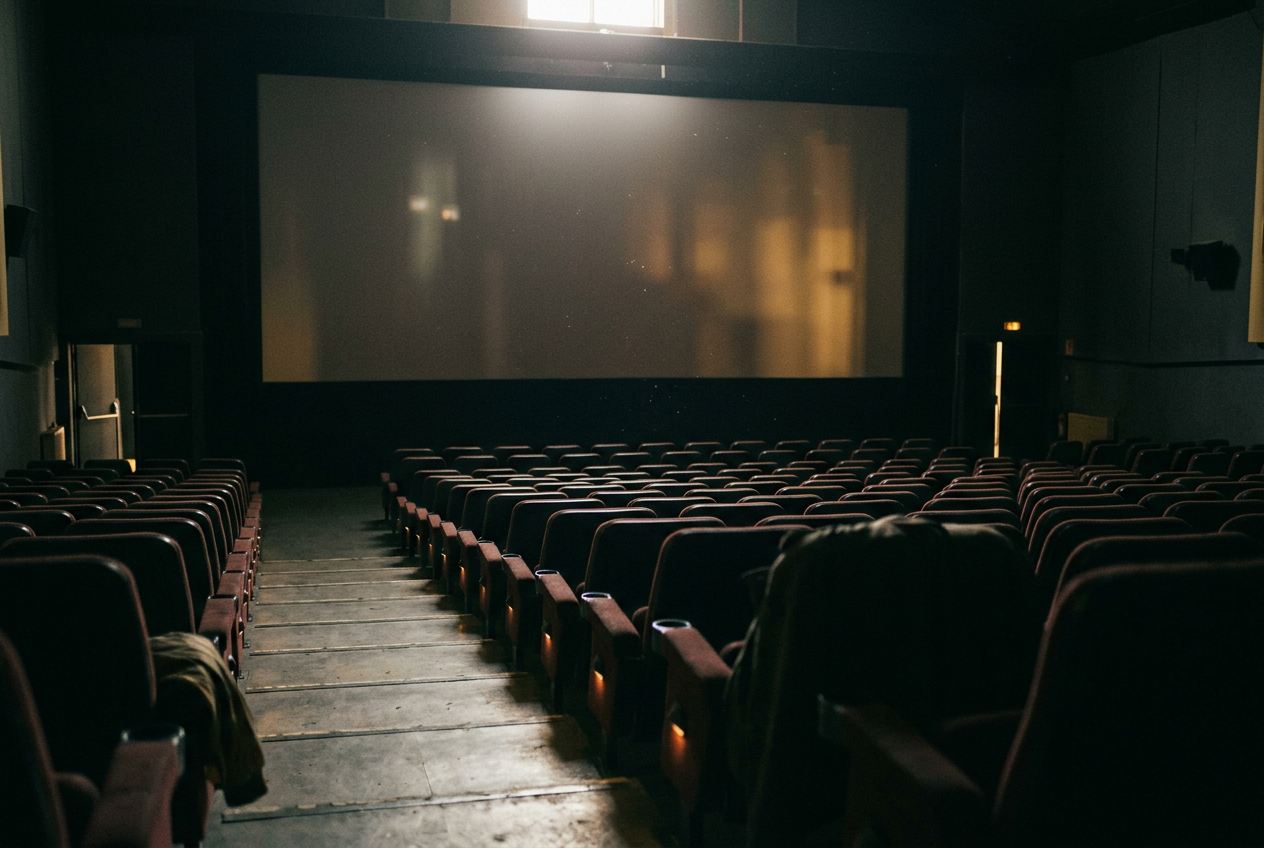
This is cinema coverage, concerned with theatrical formats rather than eventual home viewing. The opening sections avoid consequential spoilers; the sequence walkthrough later discusses locations, confrontations and broad late-film developments without revealing the final dramatic resolution.
The useful test for Superman is the kaiju attack in Metropolis, where James Gunn has to keep several kinds of information readable at once: the creature’s scale against the skyline, Superman’s changing position around it, the activity at street level and the smaller rescue decisions that distinguish him from the other powered figures nearby. Return to that sequence when comparing screens. If the buildings look gray rather than dimensional, the creature’s movement smears and the dialogue disappears beneath the low end, the auditorium is wasting the film’s clearest case for a premium ticket.
A large screen helps. Size alone does not settle it.
What the premium ticket is buying
Superman does not treat spectacle as a steady escalation in which every action scene is larger than the one before it. The film alternates between public destruction and enclosed exchanges, sometimes cutting from an image designed around a city block to a conversation whose important material sits in an expression or a pause. That rhythm means the premium decision turns on the auditorium’s calibration as much as its dimensions.
IMAX, a premium presentation system that can combine a taller image with a large screen and higher-output sound, is the straightforward upgrade when the local venue has a genuinely imposing screen and modern projection. The taller composition gives flying bodies and vertical buildings more room, while the physical size makes Superman’s rapid changes in altitude easier to follow. A smaller branded auditorium with mediocre brightness offers less.
A 70mm print, meaning an image projected from wide film stock rather than a standard digital file, is a different proposition. It can bring a pleasingly stable, textured image when the print and projector are maintained well, but the label does not guarantee the tallest screen, the sharpest presentation or the strongest version of Superman’s digital effects. Nor does a 70mm engagement turn the production into large-format film photography after the fact. Choose it for the specific theater and its projection reputation, not for the number on the listing.
The most practical order is therefore simple: a large, well-run IMAX auditorium first; a bright premium digital screen with disciplined sound second; a trusted standard auditorium third. An unfamiliar 70mm engagement belongs wherever that particular venue’s projection standards place it.
The opening defeat favors clarity over size
The early action presents Superman under pressure rather than arranging a long entrance around his power. Bodies cross the frame quickly, impacts arrive with little ceremonial buildup and the environment matters chiefly as a measure of how far he has been knocked off balance. A bigger screen adds force to the displacement, yet the sequence needs clean motion more than monumental scale.
This is where poor premium projection can become actively unhelpful. If fast movement loses edge definition, meaning the boundaries between a figure and the background become indistinct, enlarging the image enlarges the confusion. A strong standard screen can preserve the staging perfectly well, and controlled volume matters because the impact sounds should establish physical stress without flattening the music and effects into one continuous blast.
The Fortress material that follows makes a similar demand. Its architecture gains some presence from screen height, but the sequence works through recovery, odd mechanical behavior and Superman’s relationship with the space. Black levels matter here: a projector should render dark areas with visible separation rather than turning every shaded surface into the same charcoal field. Dolby Cinema may compete strongly with IMAX in this stretch if its contrast is better, even when its screen is smaller.
The kaiju attack is the reason to upgrade
Metropolis provides the film’s cleanest premium-format demonstration because the kaiju sequence keeps changing the viewer’s unit of measurement. One shot asks the eye to take in the creature against towers; another brings Superman close enough that his effort becomes visible; the next drops toward civilians, vehicles or a vulnerable animal, restoring the human scale that a generic destruction sequence would ignore.
That movement between scales is the construction, not decoration. On a large screen, the wide views establish where danger is spreading before the closer cuts isolate Superman’s response, so his diversions and rescue choices remain connected to the larger emergency. On a small or dim screen, smoke, concrete and the creature’s body can collapse into a narrow band of similar tones, leaving only the loudest impact as the scene’s organizing principle.
Sound also earns part of the surcharge, though raw loudness is the wrong measure. The sequence needs separation across the sound field, which is the ability to place effects in distinct speaker positions, because movement above and around the audience helps communicate where Superman has gone when the edit accelerates. A balanced system keeps the creature’s weight in the bass while preserving cries, instructions and brief comic interruptions. If dialogue regularly becomes difficult to understand in a theater, choose another venue rather than assuming the premium logo will fix it.
The kaiju attack also reveals why the front rows are a poor bargain. Too close, and the viewer must scan the screen to find street-level details after looking toward the creature’s head. A central seat around the middle-to-rear portion of a steep IMAX room lets the whole composition remain available, which matters more here than the sensation of being overwhelmed by it.
The international battle needs width and geography
The conflict involving Boravia and Jarhanpur shifts attention from a single giant threat to several powered combatants operating across open ground. This section benefits from width, clean directional sound and enough brightness to distinguish figures moving against dust, terrain and military hardware. It does not require the largest possible screen to the same degree as the kaiju attack.
Legibility comes from geography: where the opposing forces begin, which characters cross the boundary and how quickly an intervention changes the balance. The action has a brisk, almost procedural quality when those relationships are visible. Excessive bass can make it feel heavier while communicating less, particularly once energy effects, aircraft and impacts begin occupying the same passage.
A well-calibrated standard auditorium loses some breadth but little essential information. The scene’s attraction lies in coordination and personality, especially the contrast between Superman’s moral concern and the more tactical behavior of the other heroes, rather than in an image that must tower over the audience. Viewers paying a substantial premium only for this portion would not get enough back.
The pocket universe is a contrast test
The pocket-universe passages move the film into enclosed corridors, cells and artificial spaces, where the image depends on controlled darkness and sharply separated light sources. Premium scale helps the architecture feel oppressive, but contrast does more of the work. A huge screen with raised black levels can expose the sets and effects without preserving their intended depth.
The action here is built around escape routes, barriers and sudden changes in who controls a confined area. It needs the eye to register doors, surfaces and the positions of several characters before an effect interrupts that arrangement. Bright laser projection or a strong Dolby presentation may outperform an older, larger auditorium, since additional screen area brings little benefit when shadow detail has disappeared.
This section also carries more dialogue and reaction work than the Metropolis kaiju attack. The quieter exchanges do not become more intimate merely because the faces are larger. They improve when skin tones remain natural, voices stay anchored near the screen and the room is quiet enough that restrained delivery does not compete with ventilation noise or sound bleeding through a wall.
The final Metropolis action uses scale unevenly
Later action returns to Metropolis with more competing planes of movement, including aerial pursuit, activity inside vehicles and a city-level threat whose visual logic matters beyond individual punches. This is the other passage that supports an IMAX upgrade, although it is less consistently legible than the kaiju sequence because the film cuts among more objectives.
The large screen pays off when the city itself becomes the diagram, letting streets, buildings and airborne figures establish the boundaries of the problem. It pays off less during close combat, where speed and visual effects compress the space and the staging narrows to one body driving another through the frame. Those impacts are louder in premium sound. They are not always clearer.
The kaiju attack remains the better test because it repeatedly restores orientation after each burst of movement. The finale sometimes asks the audience to retain geography across parallel threads, which no projection format can solve if a cut arrives before the previous image has settled. A standard screen sacrifices magnitude here, but it does not remove the narrative information required to follow the resolution.
The quieter material survives every competent format
Lois and Clark’s extended conversation, the Daily Planet scenes and the Smallville material depend on timing, facial response and the space allowed around an uncomfortable answer. These passages benefit from a large, bright image in the general way that all well-photographed faces do, yet none justifies a premium surcharge by itself.
Their real requirement is restraint from the auditorium. Dialogue should sound direct rather than reverberant, music should enter without swallowing the room and low-light interiors should retain detail. Home viewing can serve these scenes well on a decent television with the phone put away, but waiting means losing the theatrical contrast between Superman as a city-sized public object and Clark as a person being questioned at close range.
That contrast is the reason to see the film theatrically, even when the biggest screen is optional. The kaiju sequence establishes the public scale. The apartment and Smallville scenes reduce it without changing the character under examination.
Questions people ask
Is Superman worth an IMAX ticket?
Yes, if the theater has a genuinely large screen, bright projection and controlled sound. The Metropolis kaiju attack and parts of the final city action use screen height and spatial audio well. A small IMAX-branded room offers a weaker return, especially when a nearby standard auditorium is known to be brighter.
Does Superman need to be seen in 70mm?
No. A 70mm print can be appealing at a theater with skilled projection, but the format is not required to understand or appreciate the film’s compositions. Check whether the listing refers to conventional 70mm or IMAX 70mm, then prioritize the venue’s maintenance and screen size over the format label.
Is
Dolby Cinema a better choice than IMAX for Superman?
Dolby Cinema can be the better option when its stronger contrast and cleaner sound outperform the local IMAX room. IMAX has the advantage for the kaiju’s vertical scale and aerial movement, while Dolby may render the Fortress, pocket-universe passages and nighttime imagery with deeper separation. The specific auditoriums decide this comparison.
Can Superman wait for home viewing?
It can, particularly for viewers more interested in Lois, Clark and the Daily Planet than city-scale action. Home viewing reduces the kaiju attack’s shifts between street and skyline, though, and ordinary television speakers may compress its directional effects. If waiting, use the largest available screen, turn off motion smoothing and keep subtitles available for dense action passages.
One update a day
Today's review, in your inbox
One review each morning — no hype, no filler, just what is worth watching.


